Storefront Christmas Window Display: Designing for the Sidewalk
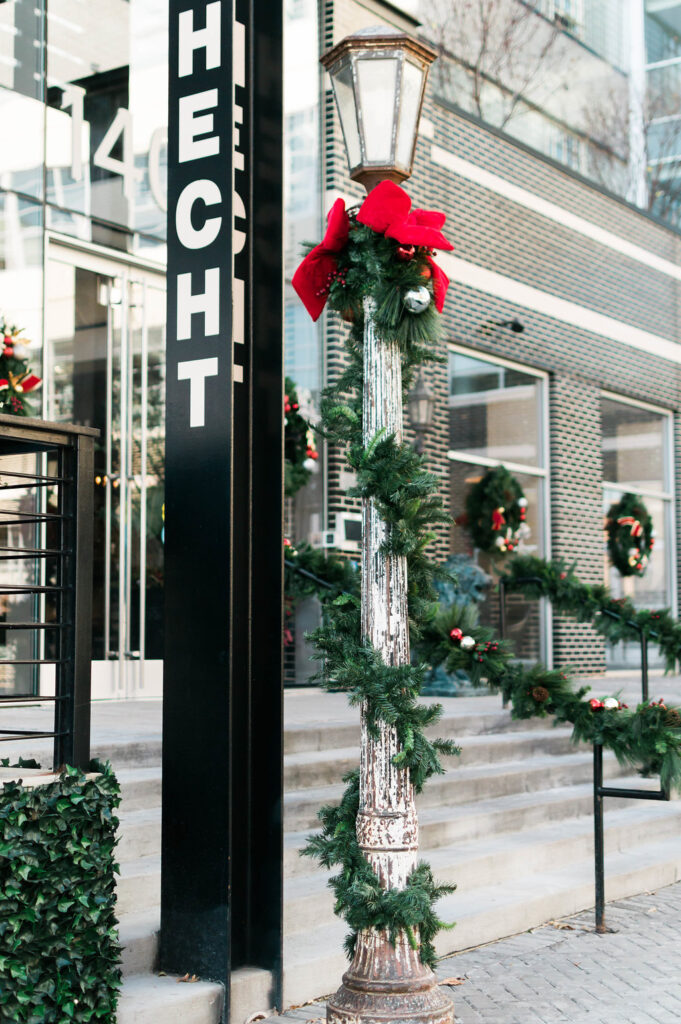
A storefront window works differently from the rest of a shop. It is seen from the sidewalk, at a distance, through glass, often at night. A storefront Christmas window display has to read quickly and hold attention from several angles at once.
For shops across the DMV, from walkable main streets to neighborhood shopping districts, the window is the first and sometimes only impression a passerby gets. Here is how we plan one.
Design for the Sidewalk, Not the Showroom
Start by standing where the customer stands. Check the view from across the street, from the curb, and from a few steps away. Decor that looks good from two feet can disappear at twenty. Sightlines determine what gets placed where, and what gets scaled up.
Eye level matters. Most pedestrians look straight ahead and slightly down, so key elements should sit between waist and head height, with taller pieces behind to add depth.
Build a Clear Focal Point
A window with ten competing elements has no focal point. Choose one: a tree, a large wreath, a suspended arrangement, a staged scene. Then support it with layers at different heights and distances, which creates depth through the glass.
Restraint is part of the design. A window that is full but organized reads as considered. A window that is crowded reads as overstocked.
Balance Decor and Merchandise
Decor should frame the product, not compete with it. Keep a clear area for the items you want customers to notice, and choose colors and materials that complement your merchandise and brand. If the shop sells in earth tones, a bright palette pulls attention away from the product.
Keep it flexible as well. If merchandise rotates over the season, the display should allow swaps without taking apart the whole window.
Extend the Display to the Entrance
The window draws people in, and the doorway completes the thought. A garland, wreath, or pair of planters at the entrance carries the same palette and materials as the window, so the storefront reads as one composition. It also signals that the shop is open and welcoming, which matters on a cold evening when customers are deciding where to go.
Plan the Lighting for After Dark
In December the sun sets before most people leave work, so a large share of foot traffic sees your window lit by its own lighting. Warm white works best. Aim it at the display, not at the glass, to avoid glare and reflections that wash out the view. Timers keep the display on a consistent schedule.
Daytime needs attention too. Reflections from the opposite side of the street can hide a display, so check the window from outside at dusk, in late evening, and in midday light.
Consider the Streetscape
Your window sits beside others. On a shared block, a display that is too bright, too tall, or too different in tone can feel out of place, while one that is thoughtfully scaled to the building and the street tends to stand out in a good way. Look at the neighboring storefronts and the street lighting before finalizing the design, and aim for a window that holds its own without overpowering the block.
Work Within Guidelines
Many shops operate within landlord rules, business improvement district guidelines, or historic district review. These can govern what may be attached to a facade, how lighting is wired, and what extends over the sidewalk. Review them before design begins, and confirm any approvals needed for exterior elements.
Maintain the Window Through the Season
Glass creates its own challenges. Condensation, sun exposure, and cold snaps all affect materials in the window. Live greenery dries out near warm lights and sunny glass, so artificial or preserved materials usually hold up better.
Plan regular checks to refresh the display and clean the glass. A well-designed window loses impact quickly if it is dusty or has burned-out lights.
Start Early
Window displays work best when they are in place before the shopping season starts. A storefront Christmas window display takes time to design, build, and install, so planning in early fall leaves room to get it right.
Ready to plan your storefront? Request availability at thebellenoel.com and we will begin the design process with a walk-through of your window.
