Corporate Holiday Party Decorating: Designing the Room Before the Guests Arrive
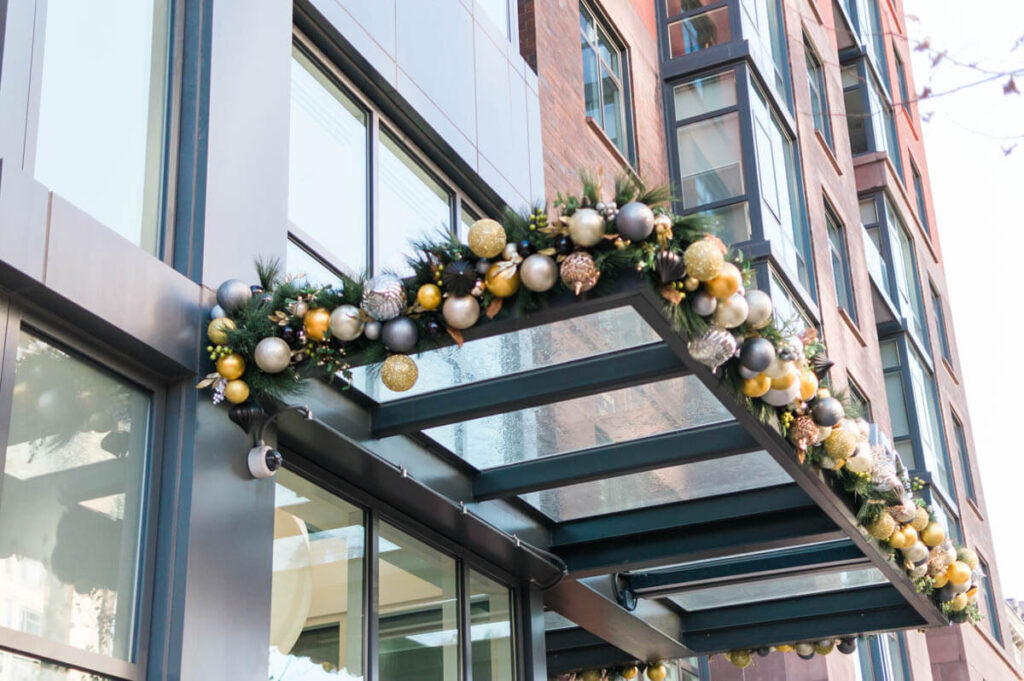
Guests form an opinion of a company holiday party in the first thirty seconds. They walk in, take in the room, and decide how the evening will feel. Corporate holiday party decorating shapes that moment, and it works best when it is planned around the space rather than added to it.
For companies across the DMV, the setting might be a hotel ballroom, a museum hall, a restaurant buyout, or the company’s own lobby. Each asks for a different approach. Here is how we think it through.
Start With the Room, Not the Theme
Most rooms need adjustment before any decor goes in. Ceiling height, lighting temperature, columns, and window placement all change how greenery, trees, and installations read. A garland that looks full in a showroom can look thin against a twenty-foot wall.
We walk the space first. We note where guests will enter, where they will gather, and where the eye settles. The theme follows those decisions, not the other way around.
Plan Around Guest Flow
A party room has a rhythm. Guests arrive, check in, find a drink, find colleagues, and move toward food or a program. Decor should support that movement.
- Entry: The first installation sets the tone. Keep it in proportion to the doorway and clear of the check-in line.
- Gathering areas: Bars and lounge groupings are natural places for focal points, since guests spend the most time there.
- Pathways: Keep circulation open. Decor that interrupts movement reads as clutter, however well made.
Match the Decor to the Format
A seated dinner, a cocktail reception, and a daytime lunch each use a room differently. Seated events put more weight on tables and sightlines across the room. Standing receptions put more weight on bars, entries, and areas where guests cluster. We design for the format first and the finishing touches second.
Let Scale and Proportion Lead
Large rooms need larger gestures. One oversized tree, a suspended installation, or a staged entrance does more for a ballroom than a dozen small centerpieces. In a smaller room the opposite holds. Restraint keeps the space from feeling crowded.
Tables follow the same logic. Centerpieces should sit low enough for conversation across the table and be sized to the table, not to the photograph that inspired them.
Use Lighting to Do the Quiet Work
Warm white light flatters people and materials. Cooler light flattens both. We coordinate decor lighting with the venue’s existing fixtures and consider the time of day the event will run. A room that works at a 6 p.m. cocktail hour may need adjustment by 9.
Uplighting on trees and greenery adds depth without adding more decor, which keeps the room balanced.
Give Guests a Place to Gather and Photograph
Guests will take photos, so give them somewhere designed to do it. A tree, a greenery wall, or a staircase treatment works well when it sits in good light and away from main circulation. It becomes a natural meeting point without competing with the rest of the room.
Confirm Venue Requirements Early
Venues set their own rules. Load-in windows, ceiling rigging limits, fire code restrictions on greenery and open flame, and limits on adhesives or nails all affect what can be installed. Historic buildings in D.C., Alexandria, and Annapolis often have the tightest restrictions. Asking early prevents redesigns late in the process.
Delivery and removal timing matter too. A ballroom turned over from another event the same day leaves a short window for installation.
Keep the Brand Present, but Quiet
Company colors can be carried through ribbon, florals, and accent materials without turning the room into a trade show booth. A restrained palette, repeated consistently, ties the room to the company without announcing it. Logos belong on signage, not on the greenery.
Start Planning in the Fall
December dates fill early, and venue approvals take time. If your party falls in the first weeks of December, the design conversation should begin now. Corporate holiday party decorating goes more smoothly when the venue walk-through happens weeks ahead, not days.
Planning a company celebration this season? Request availability at thebellenoel.com and we will begin the design process with your venue.
