Holiday Decorating for HOAs and Residential Communities
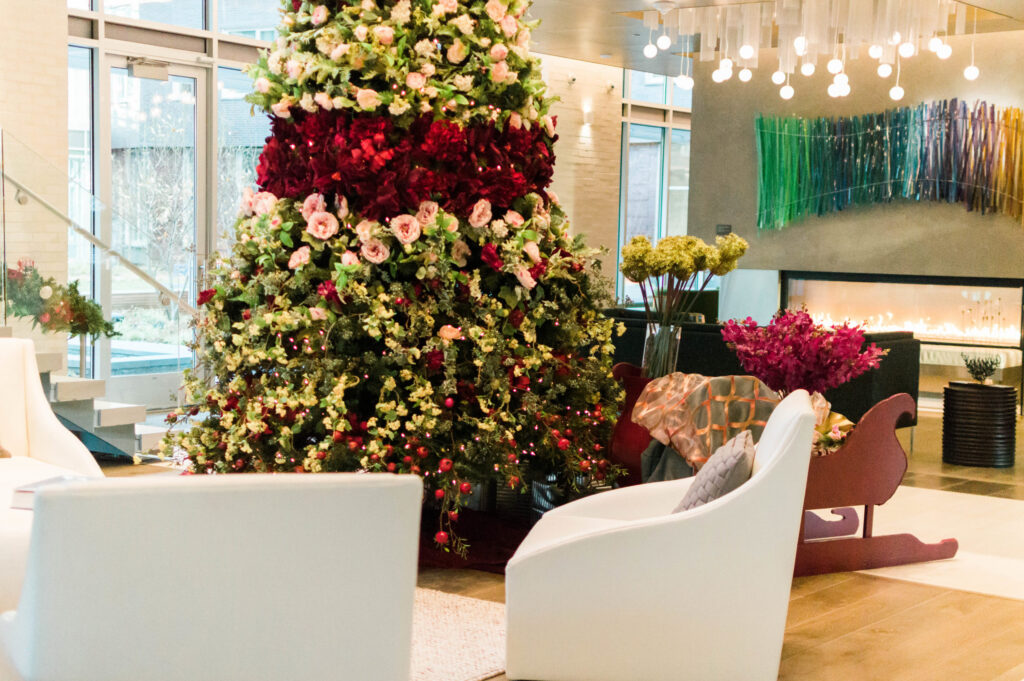
Homeowners associations and residential communities have a specific challenge during the holiday season: creating an environment that feels welcoming and well-maintained without overstepping community standards or alienating residents with differing preferences.
The solution is almost always the same. Focus professional holiday decorating investment on shared spaces, keep the design cohesive and grounded, and let individual residents handle their own properties within whatever guidelines the community maintains.
Where Professional HOA Holiday Decorating Makes Sense
Shared spaces are where HOA holiday decorating investment delivers the most value. Community entrances and gatehouse areas create the first impression for residents and guests. Clubhouses and amenity buildings are gathering spaces that benefit from a considered seasonal environment. Walking paths, water features, and landscaped common areas all offer opportunities to extend a holiday atmosphere through the community in a way that feels cohesive rather than piecemeal.
These are also the areas where a professional installation is clearly worth the investment. An entrance that is decorated with appropriate scale, quality materials, and intentional lighting signals community pride and attention to detail. A poorly executed or DIY approach to the same space signals the opposite.
Designing for a Diverse Community
One of the most common concerns HOA boards raise about holiday decorating is how to create a seasonal environment that feels inclusive across a community with diverse residents. The answer lies in design choices that emphasize winter atmosphere over religious iconography.
A community entrance decorated with layered white and green garlands, warm lighting, natural materials, and proportionate scale creates a genuinely beautiful seasonal environment without making assumptions about what any individual resident is celebrating. The focus is on atmosphere, not symbolism. This approach tends to satisfy the broadest range of community members and avoids the conversations that more specifically themed displays can generate.
Scale and Quality in Community Entrances
Entrance installations for residential communities need to be scaled to the environment, which is often larger than people expect. A community entrance with a substantial gate structure, mature landscaping, and a long approach requires a proportionate installation. Undersized garlands and small accent pieces disappear in these environments.
Quality also matters more at community entrances than almost anywhere else because these elements are seen daily by every resident for six to eight weeks. A display that looks good in the first week but deteriorates quickly reflects poorly on the HOA board and on the community itself. Professional-grade materials and installation methods hold up across the full display period in a way that lower-quality alternatives do not.
Clubhouse and Amenity Building Decoration
Clubhouses and amenity buildings offer more design flexibility than community entrances because they are interior spaces where residents gather for holiday events, community meetings, and daily use. A professionally decorated clubhouse becomes a destination during the holiday season.
The approach here should match the character of the space. A contemporary clubhouse with clean architectural lines calls for a restrained, modern holiday palette. A more traditional building with warm finishes and classic architecture supports a richer, more layered installation. In both cases, the goal is a holiday environment that feels like a natural extension of the space.
Fireplace mantles, reception areas, and gathering spaces within the clubhouse all contribute to the overall environment. A professional decorating company plans these elements in relation to each other so the installation feels cohesive throughout the building rather than assembled piece by piece.
Working With HOA Boards and Community Managers
HOA holiday decorating projects involve more stakeholders than most commercial jobs. Board approval processes, community manager coordination, and in some cases resident input all factor into how a project moves forward. An experienced commercial holiday decorating company understands how to work within these structures without creating extra administrative burden for the people managing the community.
The planning conversation should happen early, ideally by August, to allow time for board review and approval before installation windows become constrained. Communities that want decor in place for Thanksgiving-week events or early December gatherings need to move the planning timeline accordingly.
Belle Noel has worked with residential communities and HOAs across the DMV area since 2009. Visit thebellenoel.com to discuss a holiday decorating program for your community this season.
