Real vs. Artificial Trees and Greenery for Commercial Holiday Decorating
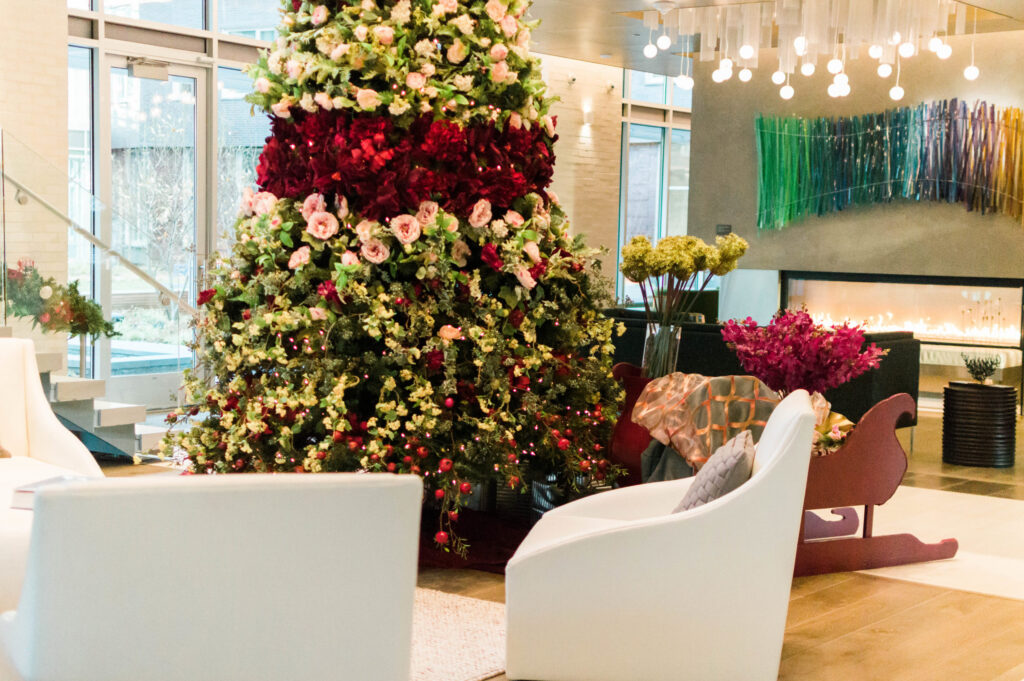
The real vs artificial commercial Christmas trees question comes up early in almost every planning conversation, and it is usually framed as an aesthetic decision. For a business, it is really a question about maintenance, timeline, and how the space will be used for the full season, not just on opening day.
What Businesses Should Weigh Beyond Appearance
A commercial space is occupied differently than a home. Lobbies, restaurants, and retail environments see daily foot traffic, HVAC systems running continuously, and, in many cases, a display that needs to look complete for six to eight weeks without daily attention. Fire codes in many commercial buildings also play a role, and some properties have restrictions on live trees in public areas. These practical factors usually narrow the decision before design preferences even come into play.
The Case for Real Trees and Greenery
Real trees and fresh greenery bring a texture, scent, and depth of color that artificial materials still cannot fully replicate. For businesses with shorter display windows, such as event venues or spaces decorating for a specific holiday event, a real tree can be the right call. The tradeoff is a shorter usable life, daily watering needs, and needle drop that requires ongoing cleanup, which is a real consideration in high-traffic commercial areas.
Real trees also require a source and delivery timeline that fits the business’s schedule, since availability and quality vary as the season progresses. A business planning around a real tree needs to build sourcing into the same early planning window used for the rest of the season’s decor, rather than treating it as a last-minute purchase.
The Case for Artificial Trees and Greenery
For most commercial properties decorating for the full season, high-quality artificial trees and greenery are the more practical choice. Commercial-grade materials are built to hold their shape and color for weeks without maintenance, they meet fire code requirements more easily, and they can be reused across multiple seasons, which changes the long-term value of the investment. The perception that artificial always looks artificial is outdated. Structure, proportion, and lighting design have far more influence on how a tree reads in a space than the material itself.
Cost Over the Life of the Display
Real trees and greenery are typically a seasonal purchase, replaced every year, while commercial-grade artificial trees are an investment that can be used across several seasons when properly stored. For a single event, the upfront cost of a real tree is often lower. For a business decorating the same lobby or storefront year after year, a quality artificial tree usually becomes the more cost-effective option within a few seasons, particularly once labor, delivery, and disposal for a real tree are factored into the total cost each year.
Making the Right Call for Your Space
The right answer depends on the building, the display timeline, and how the space is used day to day. A multi-tenant office lobby with an eight-week display and limited daily staff attention has different needs than a restaurant refreshing its centerpiece tree weekly. A decorator who understands both the design intent and the practical constraints of the space can help make this call early, before ordering or installation timelines are set.
It is also worth noting that many businesses use both. A real, fragrant garland at an entrance paired with a structured artificial tree in the main lobby is a common approach, since it brings in the sensory element of real greenery where it matters most while keeping the larger, harder-to-maintain elements low maintenance for the full season.
The Belle Noel sources and installs both real and commercial-grade artificial trees for businesses across the DMV. To talk through the right fit for your space, start planning your season at thebellenoel.com.
