Weatherproofing Outdoor Commercial Holiday Decor for DMV Winters
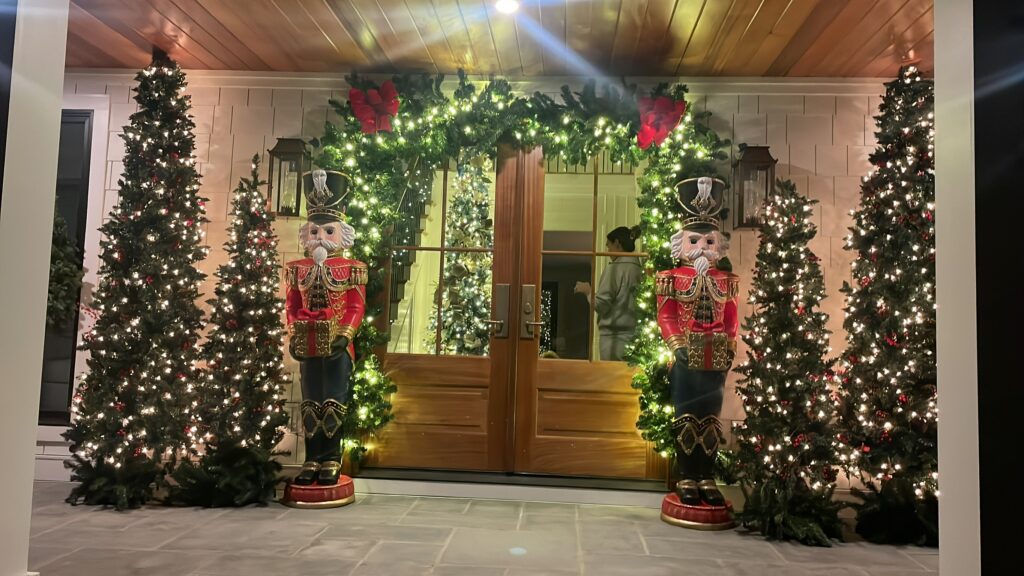
Outdoor holiday displays in the DMV area face a wider range of conditions than most people expect. A single season can bring wind gusts, freezing rain, snow accumulation, and stretches of unseasonably mild weather, sometimes within the same week. Weatherproofing outdoor holiday decor is not an extra step, it is part of the design process from the beginning, and it determines whether a display still looks complete in late December or has already started to fail by mid-month.
What DMV Winters Do to Outdoor Displays
Freeze-thaw cycles are the biggest factor. Moisture that gets into a fixture, wreath, or garland base during a warm afternoon can freeze overnight, expand, and weaken the structure over repeated cycles. Wind is the second major factor, particularly for anything mounted at height, such as rooflines, columns, or freestanding trees. A display built for a mild climate will not hold up the same way in an area that regularly swings between 50 and 20 degrees within a few days.
Materials That Hold Up to the Season
Commercial-grade outdoor lighting, weather-rated cording, and UV-stable greenery are the baseline for anything installed outside for a full season. Real greenery has a shorter usable window outdoors and needs to be planned around that timeline, while high-quality artificial greenery, built specifically for exterior use, holds its color and shape through repeated freezing and thawing. Materials matter more outdoors than indoors, since there is no climate control buffering the display from the elements.
This is also where the difference between residential-grade and commercial-grade materials becomes clear. Products designed for a single-family front porch are rarely built to withstand a full season of exposure on a commercial rooftop, column, or exterior sign. Commercial-grade materials cost more upfront, but they are built with a rated lifespan for continuous outdoor use, which is the difference that shows up by the time January arrives.
Installation Choices That Prevent Damage
How a display is mounted affects how well it survives the season. Secure anchoring, proper drainage around ground-level installations, and sealed electrical connections all reduce the risk of weather-related failure. Spacing and scale also matter here. Fixtures that are too large for their mounting point put more stress on the structure during wind events, which is one more reason installation should be planned by someone who understands how the specific site behaves in winter conditions.
Power and Lighting Layout Considerations
Outdoor electrical layouts need their own weatherproofing plan. Connections should be elevated off the ground where possible, sealed against moisture, and run on circuits rated for outdoor and cold-weather use. Timers and controllers exposed to the elements need weather-rated housings, since repeated exposure to snow and freezing rain is one of the more common causes of mid-season lighting failure. Planning the electrical layout alongside the design, rather than as an afterthought, is one of the clearest differences between a display that lasts the season and one that needs repeated repairs.
Maintenance Through Freeze-Thaw Cycles
Even a well-installed display benefits from a mid-season check. Bulbs and connections can loosen with temperature swings, and greenery can shift after a heavy snow load. Businesses that build in a maintenance visit partway through the season typically avoid the visible wear that shows up on displays left unchecked from installation through January.
A mid-season visit is also the point where small issues get caught before they become visible problems. A section of lighting that has gone dark, a wreath that has shifted after a windstorm, or a connection that worked loose during a freeze-thaw cycle are all easy to correct with a scheduled check. Left alone, they tend to compound, especially in the weeks around the holidays when a display gets the most visibility from clients, employees, and the surrounding community.
The Belle Noel designs and installs outdoor commercial holiday displays built for the DMV climate. To talk through weatherproofing for your property this season, request availability at thebellenoel.com.
